Tracheostomy: Full Information
What Is Intubation? Why Can It Eventually Lead to a Tracheostomy?
April 2, 2020
 Tap the image to enlarge ↗
When a patient is struggling to breathe or can no longer breathe adequately, the doctor may tell the family, “We need to intubate.”
For our family, what came after intubation was an even more difficult decision: a tracheostomy.
We Thought We Were Finally Going Home
When my little boy was 10 months old, he was hospitalized with pneumonia for more than a month.
When the pneumonia seemed to have cleared, we started the discharge process, thrilled that we would finally be able to take him home and be together again.
His tiny body sat in a stroller as we happily pushed him around near the nurses’ station.
We thought the hardest part was finally behind us.
Then, just as we were about to leave the hospital, his lips suddenly turned blue and he began struggling to breathe.
We shouted for help, and nurses and doctors rushed over.
We later learned that the infection had not truly ended the way we thought it had. His lungs began producing large amounts of mucus again. At the time, one lobe of his lung had already collapsed, and because of his low muscle tone, even the most basic act of coughing up mucus was extremely difficult for him.
Most people cough when they have mucus in their airways.
But when a person’s respiratory muscles are too weak, it is not that they do not want to cough. They simply do not have enough strength to push the mucus out.
When the mucus could not be cleared, his breathing deteriorated rapidly.
Eventually, he could no longer breathe adequately on his own.
The doctors performed an emergency intubation.
That was the first time we truly entered the world of intubation, ventilators, suctioning, and the intensive care unit.
What Does Intubation Actually Do?
In simple terms, intubation creates an artificial airway.
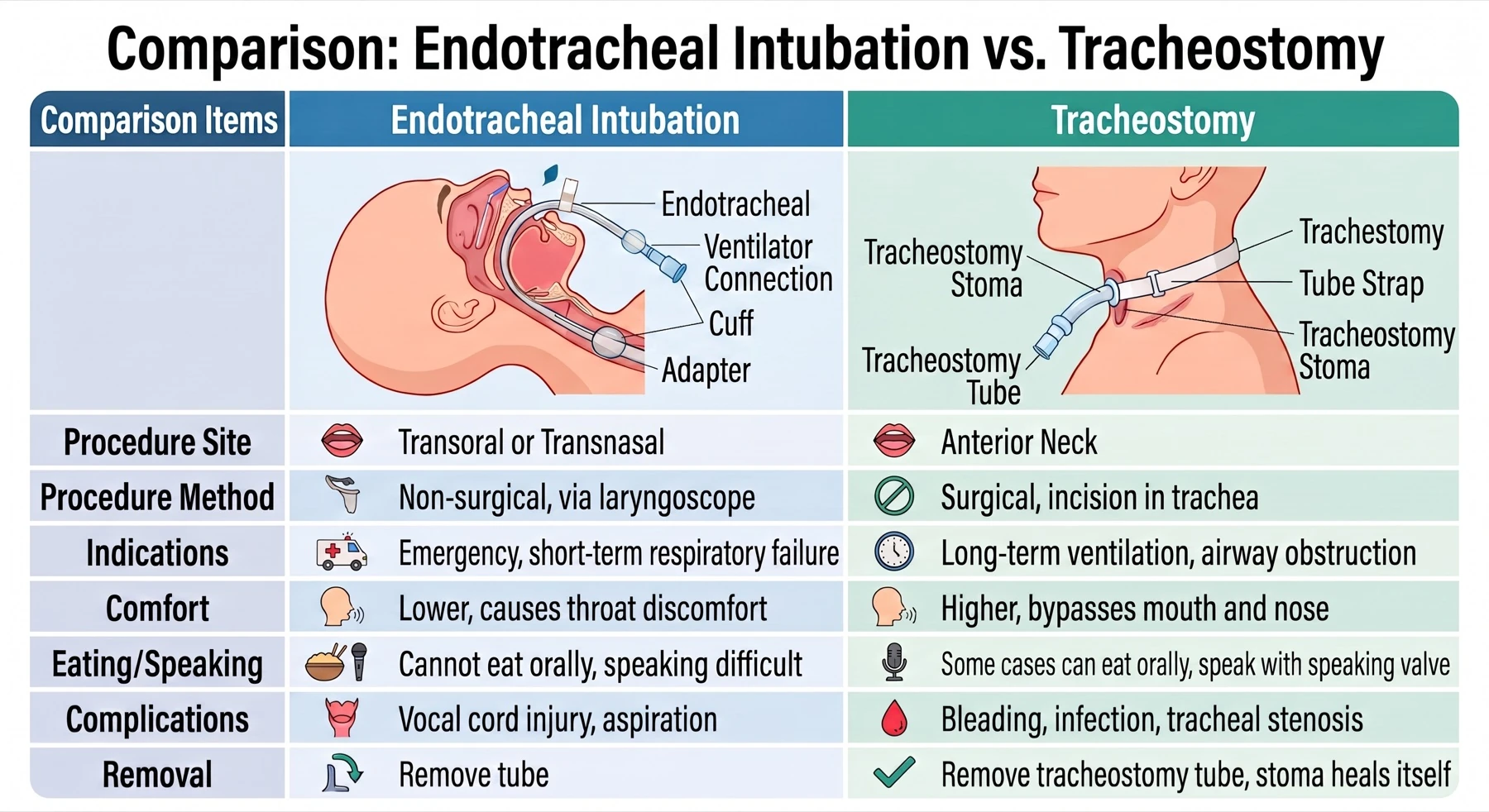
A doctor places an endotracheal tube through the mouth, past the throat and vocal cords, and into the trachea. The tube can then be connected to a ventilator.
So intubation and a ventilator are not the same thing:
- Intubation creates the airway.
- A ventilator uses that airway to support the patient’s breathing.
When someone can no longer maintain adequate breathing on their own because of pneumonia, critical illness, trauma, or another condition, intubation may be the first lifesaving step.
For neuromuscular diseases such as SMARD1, however, the situation can be somewhat different.
The problem is not always the lungs themselves.
Sometimes the lungs can still function, but the muscles responsible for breathing are no longer strong enough.
When the diaphragm and other respiratory muscles become weak, it is like having a balloon that still works but losing the pump that moves air in and out.
In that situation, the ventilator helps take over the work of breathing.
But Isn’t the Tube Removed Once the Patient Gets Better?
For many people, yes.
For example, if severe pneumonia causes temporary respiratory failure, doctors may intubate the patient and use a ventilator. As the pneumonia improves and breathing function returns, ventilator support can gradually be reduced.
If the patient can breathe independently again, the medical team can assess whether the breathing tube can be removed.
So: intubation does not automatically mean a tracheostomy will be needed.
The real question is: what happens if the tube cannot be removed?
That was the situation we eventually faced.
After Two Months of Intubation, We Still Couldn’t Remove the Tube
After my little boy was intubated, we kept waiting for him to recover.
One day, two days, a week, a month…
He was never able to come off the ventilator successfully.
In the end, he remained intubated for about two months.
An endotracheal tube runs from the mouth through the throat and vocal cords into the trachea. It is generally better suited as an artificial airway during an acute illness than as something to remain in the body indefinitely.
Prolonged intubation can increase the risk of complications such as injury to the larynx and vocal cords and ventilator-associated pneumonia. It can also make oral care, secretion management, and patient comfort more difficult.
That was when the doctors began talking to us about a tracheostomy.
Why Can Intubation Eventually Lead to a Tracheostomy?
A tracheostomy is a surgical opening created in the trachea through the neck.
The biggest difference between intubation and a tracheostomy is actually quite simple.
- Intubation: mouth -> throat -> vocal cords -> trachea
- Tracheostomy: opening in the neck -> directly into the trachea
If ventilator support is needed only for a short time, intubation through the mouth is a fast and important emergency measure.
But if it becomes clear that the patient is unlikely to come off the ventilator in the near future, another question has to be considered: should a more suitable artificial airway be created for longer-term respiratory care?
That is why doctors may begin discussing a tracheostomy.
It is not: “The patient was intubated, so a tracheostomy must come next.”
It is: “We used intubation to get through the acute stage, but the patient still cannot come off the ventilator.”
Those are two very different things.
At the Time, We Felt We Had No Real Choice
I still remember that episode of pneumonia. Altogether, my little boy spent nearly four months in the hospital.
He still could not breathe independently, and we could not remove the breathing tube. Eventually, the doctors recommended a tracheostomy.
In theory, this was a “medical decision.”
But from a family’s point of view, in that moment it did not feel like a choice at all.
On one side was a child who still could not breathe on his own. On the other were the injuries and complications that can come with prolonged intubation.
In the end, we agreed to the tracheostomy.
Because we wanted him to survive.
What we did not understand then was that the tracheostomy surgery was not the end of the story.
The truly long journey was only beginning.
After the Tracheostomy, We Learned How Much Comes After “Survival”
The early period after the tracheostomy was not easy.
My little boy continued to go in and out of the ICU because of recurrent pneumonia.
We also began learning an entire world of care that we had never even known existed:
Suctioning, tracheostomy tube care, ventilators, oxygen saturation, humidification, infections, alarms…
And how to tell whether our child simply had mucus in his airway or was actually becoming hypoxic.
For most people, having mucus may mean coughing a couple of times.
For a child who does not have enough strength to cough and who breathes through a tracheostomy, a single plug of thick mucus that cannot be cleared may block the airway.
That is why caregivers have to know when suctioning is needed.
During the day, at night, in the middle of the night - it makes no difference.
Over time, you realize that a tracheostomy is not simply an extra tube in the neck.
It changes the way an entire family lives.
So When Families Ask, “Should We Agree to a Tracheostomy?”
I understand that panic very well.
Because we have been there too.
From a medical perspective, you can ask the doctor about success rates, complications, whether extubation may be possible, and how long ventilator support is expected to be needed.
But what families really want to ask often includes another half of the story:
What will our lives look like after the tracheostomy?
Who will do the suctioning? Who will watch the patient at night? What happens if the ventilator alarm suddenly goes off? Can we go home? Can the child go to school? Can the caregiver still work? Are long-term care resources sufficient? Can the family afford it? Is the patient comfortable?
These questions may not appear on the surgical consent form, but they can stay with a family far longer than the surgery itself.
Sometimes I Wonder What, Exactly, We Have Prolonged
Long-term tracheostomy care is not only a medical issue.
It is also about family, finances, work, and the caregiver’s life.
The need for 24-hour care, repeated infections and hospitalizations, suctioning, ventilator alarms, and the financial and emotional burden of long-term care can sometimes make you wonder:
What does advanced medicine actually prolong - life, or the time a patient spends suffering from disease?
I cannot answer that question for any other family.
Every illness is different. A patient’s level of consciousness and quality of life are different, and every family has a different capacity for long-term care.
A tracheostomy also does not necessarily mean permanent ventilator dependence. Some patients can gradually come off the ventilator as the underlying condition improves, and may eventually even have the tracheostomy tube removed.
But for conditions such as SMARD1, which can cause long-term weakness of the respiratory muscles, a tracheostomy and ventilator may truly become part of everyday life.
That is why I wanted to write all of this down.
Not to tell any family that they “should” or “should not” choose a tracheostomy.
But so that when another family finds themselves where we once stood, and suddenly hears a doctor say, “We may need to consider a tracheostomy,”
they will at least know a little more than we did about what may come next.
If You Remember Only Three Things
- Intubation is an emergency measure. When a patient cannot maintain adequate breathing, an artificial airway is created through the mouth and, when necessary, connected to a ventilator.
- Intubation does not mean a tracheostomy is inevitable. If the illness improves and the patient regains the ability to breathe independently, the breathing tube may be removed.
- A tracheostomy is another type of artificial airway that may be considered when respiratory support is likely to become a medium- or long-term need. The decision is not only about the surgery itself. It also involves the patient’s prognosis and quality of life, as well as the long-term care responsibilities the entire family may need to take on.
This article shares our family’s personal experience along with general medical education information. Every person’s illness, prognosis, and appropriate treatment are different. Decisions about intubation, extubation, tracheostomy, or long-term ventilator support should be made jointly by the patient, family, and medical team based on the individual’s circumstances.
Get in touch
Prefer to talk privately? Email us directly. Prefer to comment publicly or share? Find us on Facebook.
The content on this site is one family’s personal caregiving account, not medical advice. Please discuss any medical decisions with your own healthcare team.